If The Pros And I Both Have Trouble, Am I A Pro?

Yesterday I played in my usual Monday game. It’s a stableford format tournament with a group called the Good Old Boys, full of guys ranging in age from their 50’s into their 90’s (no joke). Everybody competes against their previously established points average, so it smooths out the ability differences in the players.

The weather here in the Texas Hill Country was the same as it was at the HP Byron Nelson Championship over the weekend – hot with a screaming wind. We had gusts to 35 or 40 mph with a steady wind of at least 15. It was a tough day to shoot a better than average round, and we all had fun joking about how this kind of weather gave even the pros a lot of trouble. The day was full of “It was fun seeing those guys have to contend with what we have to play in,” etc.

The book Paper Tiger, by Tom Coyne, is a nice antidote whenever you go too far down the road of comparing your game to the pros.
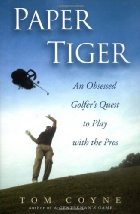
Paper Tiger, by Tom Coyne

Coyne was a good junior golfer who didn’t play seriously for quite a while and then decided to spend a year rehabbing his game and trying to make it through Q-School. The book recounts his up and down year, in which he reportedly played 5,418 holes, spent forever on the range, dropped his handicap to a +.4, and lost over 26 pounds while getting fit. All this was in 2003-2004, before Malcolm Gladwell popularized the 10,000 hours of effort to get to expert theory. Gladwell’s theory’s application to golf got some attention here, and is being tested by golfer Dan McLaughlin now.

Paper Tiger is an entertaining tale of Coyne’s experiences, and all golfers will find themselves identifying with his successes, failures, and collapses at critical moments. He finally can’t get into the PGA Q-School because of his lack of tournament experience, but he plays in the Canadian and Australasian Q-Schools. At the end, it’s a nice commentary on golf being about the journey rather than the destination, about the play rather than the score.

And if you ever start to think that you might be able to play with the big boys, read this book and call me in the morning.

Posted in book thoughts | Tagged , , , , , | Leave a comment

Long Equals Better? (Part 2)

After puzzling over the Tee it Forward program, and particularly trying to figure out why my initial reaction was cautious to negative, I’ve decided the following:

First, I reacted as I did because I immediately react negatively when someone tells me “This is how you’ll have more fun.” It sounds condescending, and is a bit too much like “You’ll thank me for this later.” I’m trying hard to get past that reaction.

Second, I almost never experience the 5 and 6 hour rounds this is supposed to correct, so maybe I’m not the best judge. The few times I have been involved in a debacle like that, moving the tees forward wouldn’t have helped. The snail’s pace was caused by players taking forever pacing off yardages, reading putts, shooting the breeze instead of playing, not letting faster players play through, sharing clubs, etc. The slow players seemed to be having a fine time, so increasing their enjoyment wasn’t an issue.

A drill instructor addressing United States Ma...

Image via Wikipedia

Third, I’ve had my enjoyment ruined more often by overzealous, brain-dead marshals and marine drill sergeant style starters than by slow players.  I’ve had too many marshals tail my group when we’re well under the suggested pace of play or tell our foursome to catch up to a twosome ahead of us when we were already ahead of pace. The marshal saw an open hole and knee-jerk reacted with a “pick it up” rather than paying attention to the situation. I solve that problem by not patronizing those courses again.

Fourth, too many golfers do play from the wrong tees, so there is a problem to be addressed. I see players who have no business there playing from the back tees and tips. They usually spray the ball all over the course, and would probably do that from the forward tees too. Maybe moving up would help. Maybe not. They’d probably tell you they hit it 300 yards anyway. I have seen some golfers, especially seniors, get back in the game and enjoy it more by moving up to the forward tees. But these guys were long-time golfers who were honest about their games. They would honestly and accurately tell you they hit a drive 175 yards at best.

Finally, I figured out my average driving distance by looking at my home course scorecard and doing the math based on my usual second shot distances. I came out with a 250-260 yard average drive, which matches correctly to the recommended length of the course from the tees I play. (Regular tees at my course – 6273 yards. Recommended course length from tee it forward – 6200-6400.) I play to an 8 handicap from those tees and my rounds with a four or fivesome average 4 hours or less. So, the tee it forward guidelines fit me. I also compared another courses tee guidelines based on handicap to that courses length and the tee it forward guidelines, and they matched.

So I’ll stay agnostic on this one. The numbers seem to work, but I wonder about the application. We’ll see how it goes.

Posted in daily golf issues | Tagged | 2 Comments

Long Equals Better?

A program encouraging golfers to use the tees appropriate to their games, such as the USGA “Tee it Forward” effort, makes sense. On the other hand, I wonder about some of its implications and effects.

I’ll say more in a few days, but the first thing I wonder about is the use of length off the tee as the sole determining factor in tee choice. Dustin Johnson’s play on number 14 today at the HP Byron Nelson Championship is a nice example of why length may not be the most important issue. He hit a really long drive, then missed the green with his wedge, chipped over the green in three, and then two putted for his bogey.

Johnson’s play around the green resembled the kind of play that most often slows my groups down. We end up waiting while somebody goes back and forth near the hole, not while a short knocker takes an extra shot to reach the green.

On the other hand, choosing the right tees is important, length does matter, and too many golfers don’t match the tee choice to their level of play. We recently instituted a policy in one of the regular tournaments I play in allowing older (over 80, and that’s years, not strokes) players to play from the forward tees. The guys who took advantage of this appreciated being competitive again.

I guess the real question is the point of the policy. If it’s solely to enhance enjoyment, then it’s hard to argue with it for those who like the idea. If it’s an attempt to speed up play – and it’s hard to argue that a reasonable pace of play doesn’t contribute to enjoyment – then maybe more than length off the tee should be considered.

I also worry some about how the program could end up being implemented at some of the more regimented courses. “Let’s see how good you are, sport. Our tee assignment area is over here.” Whack. “I don’t know if we’ve got tees that short, son. Try again when we’re not so crowded.”

Posted in daily golf issues | Tagged , , | Leave a comment

A Byron Nelson Favorite

We’ll all hear a lot about Byron Nelson this week, so here’s a bit of trivia that isn’t widely known.

The course at Riverhill Country Club in Kerrville, Texas was co-designed by Byron Nelson and Joe Finger. For those that don’t know, Kerrville is a small city in the Texas Hill Country, about an hour NW of San Antonio on I-10. It reminds me of Asheville, NC where I lived for 9 years in the 70s and 80s. The hills are smaller than the NC mountains, but both cities follow the river and valleys, have nice views, and have an artsy feel.

Texas Hill Country, west of San Antonio

Texas Hill Country, Image via Wikipedia

When asked to pick his favorite course to play, Byron Nelson said it was Riverhill. There’s a small statue of Nelson near the first tee and putting green.

I got the chance to play Riverhill a few weeks ago, and really enjoyed it. It’s an old-style course, requiring you to think your way around the course rather than overpower it (6958 yards from the back tees). The greens are smooth-rolling and undulating, there’s a lot of elevation change on several holes, and the greens complexes require a thoughtful approach. I spent a lot of time escaping from the traps around the greens. This link takes you to a course map.

The course winds through houses and condos, but I never felt hemmed in like I do on many other such courses. There was only one hole where I noticed the houses enough to wonder about the cost of a picture window, and (of course) that was the one where I hit my only poor bunker shot and bladed my wedge. If a live oak hadn’t been behind the green I might have found out the current price of glass.

Anyway, I think it’s a very good course in a very nice location. I can see why Lord Byron loved it. And if you’re wondering, I don’t get anything from or have any association with Riverhill. I just liked the course and thought it was appropriate for the week of the HP Byron Nelson Championship.

Posted in golfing memoir | Tagged , , , | Leave a comment

Keeping Your Balance

After David Toms followed up two consecutive 62s with a four over 74 at Colonial, he analyzed his third round by saying he wasn’t as sharp as when he shot the 62s, but he also didn’t play poorly.

Instead, he noted that he got some bad breaks and bounces and some putts didn’t fall that might have fallen in his rounds of 62. At the same time, he acknowledged that he hit a few poor shots.

David Toms

Image by James Marvin Phelps via Flickr

On one par 4, I unfortunately can’t recall which hole, his approach shot drew back off the green (at least partially bad luck) but he followed that up with a poor pitch (which he admitted), leading to a bogey.

What didn’t he do that most of us are likely to do after following up good play with poor play? If his interview words are to be believed, he didn’t start saying “I suck, why can’t I play anymore, I’ve lost it.” Instead, he said “I had a few bad breaks, I didn’t play great, but I don’t suck. I’m not losing it.” In psychological terms, he attributed his play to unstable and external factors (bad breaks aren’t your fault and can change), while he simultaneously took responsibility for some of the results. And he didn’t complain about the bad bounces, the wind, or whatever else he could have pointed at.

Toms’ reaction to his poor round is a nice example of how to maintain a modicum of psychological balance. Accept responsibility for what you can control and change, but at the same time recognize that a lot of life is luck and in the past, so don’t beat yourself up over what you can’t change. In fact, that’s the heart of the serenity prayer: accept what you can’t change, change what you can, and be wise enough to know the difference.

So if we wonder why David Toms could come back and win the Crowne Plaza Invitational after losing a playoff at the Players Championship the week before and blowing a 7 shot lead after the second round of the Crowne Plaza, it may be because he knows something about staying psychologically balanced while playing an infuriating, frustrating game.

I’ll try to remember that the next time I follow a birdie with a triple.

Posted in PGA Tour | Tagged , , , | Leave a comment

Get A Grip, or As The Kro-Flites

It’s time to replace my grips. I was considering this and other earth-shaking issues as I drove to the country grocery store for my morning paper, and remembered how long I played with the old leather wrap grips on my original set of Spalding Kro-Flites. When they started to unwind from the top of the shaft I’d just glue them back down.

(By the way, Bill, if you’re reading this I’d like those clubs back. That’s you, Bill. The high school trombonist from Houston back in the mid ’60s. The guy that found those old clubs in the worn out bag on his back porch that February when I moved to New Orleans. The Bill with the brother who lateraled that football to me in front of the entire onrushing team on that kickoff. I still limp sometimes. You.)

Anyway, my current R9 irons have the original stock grips. I liked the midsize New Decades on my old set of Clevelands, and I suppose I’ll go with those again. Anybody have any other suggestions? My hand size is right at the upper end for normal grips and the lower end for midsize. The regular size on my R9s are prone to slipping with minimal wear and sweat, and that’s why I’m replacing them.

(Does anybody else have this problem? Everything is almost but not quite? Hands almost big but almost not, just fast enough to be a rabbit but not fast enough to be on the team, tall enough that normal sports shirts are too short but not tall enough for big and tall shops so you have only one place you can order from and count on a fit, just good enough to get into the upper flight where you are just bad enough to get pounded?)

Back to grips. It seems appropriate that I need new grips while the Colonial is underway. As some might recall from an earlier post, I taught myself to play reading Ben Hogan’s Power Golf. My grip is still modeled on that book. I hung an old tarp between two trees in the back yard and pounded balls off bare lies for hours at a time. Balls finally started to blow through the tarp into the vacant lot across the fence.

(I think there’s a strip center in that lot now. Maybe Bill from Houston knows. How about it, Bill? You still there? I’ll settle for the 5 and 9 irons. They were my favorites.)

Posted in humor | Tagged , , , , | Leave a comment

The Sand Crab at Sawgrass

I was headed out to the range when I saw The Sand Crab watching TV in the grill. The 17th at Sawgrass was on the screen, and The Crab was staring at it like he was checking his lottery numbers.

As I got closer I saw his smartphone, a pen and notebook, and a copy of The Rules of Golf on the table next to his usual beer and well-chewed cigar. “How’s the tournament going, Crab?” I asked.

The

Image via Wikipedia

“Watch Pavin real close here,” he replied. “He might ground his club on that bulkhead, and it’s behind the yellow line. It’d be real easy to do.” We watched as Corey Pavin hit his usual precision shot, putting off the bulkhead with the bounce of his wedge. “OK, I guess he pulled that one off,” Sand Crab sighed.

I sat down at an adjoining table and looked back up at the screen. A new hole had appeared, maybe the 14th. “And you’re doing what?” I asked.

He gave me a self-congratulatory grin and a thumbs up. “Upholding the integrity of this magnificent game,” he said in his best Scottish brogue.

“You don’t think Pavin does a pretty good job of that by himself?”

The Crab tapped the earpiece of his sunglasses. “Another set of eyes never hurts.” I think he winked, but it was too dark behind those lenses to know for sure. He pointed back toward the TV. “Watch Sergio now. He’ll be really ticked if he misses this putt.” We watched as Garcia rolled in a four footer.

“Didn’t you miss one about half that length on eighteen an hour or so ago, Sand Crab?”

He nodded as he picked up his cigar. “But I didn’t want to make mine. Sergio did.”

“You didn’t want to make yours?”

“Nah. My partner had already won the hole. I need to keep my handicap up there for that big charity scramble next month. There’s some good prizes, you know. And our foursome lost our regular ringer when he moved north. We gotta find another stick with a phantom handicap.”

He pointed back at the television and waved away the comment he knew I was about to make. “Here comes another one. Watch to see if Mickelson nicks the grass on his takeaway in that bunker. He’s mighty close to the lip.”

“It’s OK if he touches the grass on his backswing, Crabpot. It’s live grass, not a loose impediment.”

“I bet there’s dead crap there too. They could always check if I called it in, like they did with Padraig and that divot on the tee. Phil was even there to help. He’d be all for me suggesting they have a look.”

“I doubt it. And I seem to remember you moved some twigs out of the way in the bunker the last time I played with you, Sandman.”

“Yeah, but we don’t have the kind of grounds crew those guys have. That junk wouldn’t have been there for them, so I figure it’s OK if I moved it.”

I changed the subject before I lost my temper. “You see the basketball game last night? Pretty good game, I thought.”

I got a grunt in return. “Would have been if the refs would have let them play. Half the game was ticky-tack fouls. Just let the guys play their game, that’s what I say.” He eagerly pointed back to the screen. “Here it goes again in slo-mo. I think Mickelson might have double hit that ball on his follow through. Watch this.”

“You do that for me, Crabs. I’ve got some balls to hit.”

As I went out the door I heard him call after me. “Before you go, could you attest this card for me? Everybody took off before they could sign for me.”

I let the door slam like I didn’t hear him.

Posted in humor, The Sand Crab | Tagged , , , , , , | Leave a comment

Time Enough For Golf

I often wonder about the amount of time I spend on golf – playing it, watching it, reading about it, writing about it. Why do  I do this? Is it worth it?

I’ve been wondering more about this the last few weeks. My regular cart partner is in the hospital, recovering from difficult surgery. One day we were playing our usual game, and the next time I went to the course he was in the ICU. When he’ll be back is uncertain.

Our game goes on, our group has filled the gap, but things are different.

My time would be full if I never picked up another club. My bank balance would probably be larger. Even if I spent money on some alternative activity, I doubt I would spend as much as I do on golf. And if I spent money, odds are I’d have something concrete to show for it.

Photo of a bandsaw on display at a Lowes store.

Image via Wikipedia

A nice band saw lasts a long time and I can make something with it. A year of greens fees just evaporates, and golf clubs aren’t good for anything but golf. (And cheesy decorations after the clubs are old enough.)

But would my life, not just my time, be as full without golf? I’ve gone for years without playing, and I always come back. I’ve always stayed busy. Golf wasn’t to fill empty time. The pull of the game always got me back, and the fun I have with my playing partners through the years kept me playing. Whenever I quit for a while it was always after I moved, so I was busy with a new job and hadn’t yet found a new group to play with.

But do I really have time for this? When I look back on my life, where will my golfing hours fit?

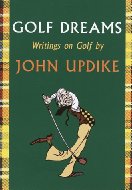
Golf Dreams by John Updike

I know I haven’t been the only person to wonder about this. John Updike had what may be the best answer I’ve ever seen. When he asked himself Is Life Too Short For Golf? he answered “Golf lengthens life.”

So here’s to Gene, my cart partner. May John Updike be right.

Posted in book thoughts | Tagged , | 2 Comments

The Economics of Putting

When Lucas Glover missed a relatively short birdie putt on the 18th at Quail Hollow today, Nick Faldo mentioned that his stroke on the birdie putt was tentative while his earlier putts to save par had been much more confident. Faldo speculated that Glover didn’t want to lose a stroke on the par saves, so he was more aggressive on those putts. In response, Peter Kostis said something like “But haven’t you added a stroke when you miss either putt?”

Kostis is obviously correct – you are a stroke worse off whether you don’t make the birdie or don’t make the par. However, you feel the miss for the par more and the bogey shows up on your score relative to par. Missing the birdie just means your score doesn’t change.

There’s a psychological and economic principle that says you feel the loss of money more strongly than you feel the gain of an equal amount. Your negative emotions related to loss are stronger than your positive emotions related to gain. If your stock goes up $1 per share you think that’s nice, but if it goes down $1 you think it’s awful.

I suppose this principle applies to golf scores, too. I’m sure Glover would have felt worse about making a bogey than not making a birdie, even if both events meant 1 more stroke on his card overall.

I leave more putts short than long. I tell myself it’s because I feel like I can make more of the second putts that way – when I miss long, I’m usually farther away from the hole than I am when I leave it short. Of course, I’m guaranteed to not make the first putt when it’s short, but I don’t feel that loss nearly as much as I feel the pain of a three putt. A three putt is a loss to me, a two putt is breaking even.

And for Glover, golf scores really are economics.

Posted in PGA Tour | Tagged , , , , | Leave a comment

Prairie Dogs at Dusk

When I was in grad school at Texas Tech in the ’70s, the little golf I managed to squeeze into my schedule was in the late afternoons and evenings.

If I had a chance to get away early enough, I’d head out to Meadowbrook, a municipal course in MacKenzie Park in Lubbock. It was always windy when I teed off, but most days the wind would lay down near sunset. If you’ve ever spent time in Lubbock, you know how much you love it when the wind lays down.

That was when I enjoyed the course the most. The 18th fairway ran along the bottom of the hill that housed prairie dog town. For the uninitiated, that’s a fenced in area full of prairie dogs that is kind of like a zoo. But you can’t really contain prairie dogs, and their burrows would encroach into the fairway.

An alerted prairie dog sitting at the entrance...

Image via Wikipedia

Burrowing owls like to live in prairie dog holes, and playing the 18th at dusk was always interesting. Your ball would very rarely go down a burrow, but after banging a drive into the near dark it was a challenge to search the fairway and hope the ball was still above ground. It was a real sight to stroll the fairway as the owls emerged into the evening air.

After finishing, I might end up back at the library or the lab, or I might get lucky and get to go home and fix dinner. I became the cook in my family long ago, when my wife worked and I was in school, and we’d eat late many evenings. Golf could make it even later.

If I couldn’t get away early enough I’d head to Treasure Island, an 18 hole par 3 (actually, it had one very short par 4) with lights for night play. Friday Night Lights wasn’t football for me.

Treasure Island was the site of my only career ace, a feat witnessed by only me. I haven’t been back to Lubbock in a long time, but I hear that a Wal-Mart Supercenter now stands where the course used to be. My unattested ace on a baby golf course has faded completely from the earth.

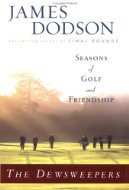
These days I’m more of a dewsweeper.

The Dewsweepers by James Dodson

Morning rounds suit my schedule better, and the groups I play with tend to have early tee times. The guys tend to be retired or self-employed, and they too can fit an early round in more reliably than they can a late round. I can play golf, sit around with the guys for a while, and still have time for running errands or working on some project before the day is over. Then I can fix dinner and my wife and I can eat at our usual (now earlier) time. It’s much more efficient. Probably healthier, too.

But I still miss the course at twilight.

Posted in golfing memoir | Tagged , , , , , | Leave a comment