Norman Mailer On Golf

Yesterday I played in our regular skins game and had a round that was simultaneously one of my worst and one of my best. I started out with an encouraging birdie, and immediately followed that with two three putt bogies. About that time the weather turned cold and windy and my game continued it’s downward slide. By the end I’d won no skins, lost big at wolf, and tied my worst score in several months.

But I had the best time that I’d had in months. Everyone in my fivesome was hitting incredibly poor shots. Only Cowboy Roy ended up playing anywhere near his handicap, and that was because he made an amazing number of “he had no business of making that” putts. But we were all laughing so hard it didn’t matter.

The Cotton Baron was on his own little tree trimming program, knocking the branches and leaves off of countless oaks lining the fairways, and some pretty deep in the rough. He hit three trees on one hole, and hit one of them twice. The Chipping Lizard couldn’t chip. He also couldn’t drive or putt. Cowboy Gene was hitting it everywhere, and I not only couldn’t putt but I also hit more balls out of bounds than I had in months.

We finished the round in a little under four hours, and were mighty glad to see the 18th green. Only three of us were playing the hole by the time we reached the green. The other two had picked up after going O.B. I don’t think all five of us finished any of holes 14-18.

Norman Mailer at Miami Book Fair. Image via Wikipedia, By MDCarchives, Creative Commons License.

Norman Mailer is reputed to have said that we are either living a little more or dying a little bit each moment of our lives. Yesterday could have easily been a day of dying a little bit. Instead, we all lived a little more in spite of the weather and our play. Norman Mailer is the last person I would have thought of as a sports psychologist, but I think I’ll try to keep him in mind.

(Of course, it wasn’t so hard for Cowboy Roy. Those totally uncalled for lucky long bombs won him some skins and most of the wolf money.)

Posted in reflections on golf | Tagged , , | Leave a comment

My Moveable Feast

Figuring out what to eat during a round of golf has always been a challenge for me. I know people who never eat during a round, no matter how long it takes or the time of day, but I can’t do that. I don’t think I’ve ever voluntarily skipped lunch, although there have been a few times where I’ve been so busy I either couldn’t or I forgot. I only think I forgot once in my life, though.

When I first started playing golf the world was a more casual (and less populated) place. We could stop at the turn for a hot dog and fit back into the flow on the course with no problem and no hassle from marshals. That’s not possible anymore, and rushing in to buy a quick dog or some other snack is no fun. I always get in line behind somebody who’s ordering drinks for twenty people and has to keep verifying the order. By the time I have my order I should be halfway down the 10th fairway. I’m also not as big on hot dogs as I used to be.

After a lot of experimentation I’ve developed my golf food collection. It keeps me going through the round, and as long as I spread it out and don’t eat it all at once it keeps my energy up without weighing me down. I have to remember to eat before I feel hungry, don’t eat too much at once, and don’t worry about whether or not eating makes sense by the clock. If I’m starting lunch at 10:30 AM, that’s just fine.

The photo above shows the raw ingredients for my lunch. It all fits into my golf bag, or it does after I turn the bread, peanut butter, and jelly into a sandwich. I usually eat the snack bar after 5 or 6 holes, half of the sandwich just after the turn, and then the other half of the sandwich over the next several holes.

The apple is always eaten on the 10th hole at my home course, no matter what hole we started on. We often are involved in a shotgun start, so the 10th hole is frequently our 13th or so, but I have a group of trained turtles waiting for my apple core in a pond beside the 11th tee. I can’t disappoint the reptiles. I’ve tried bananas or other fruit, but apples stand up to the occasional beating much better than softer fruit. The turtles don’t like banana peels very much, either.

I sip the water as needed and drink the cranberry-pomegranate juice a little over halfway through the round. I like that particular juice better than most energy drinks, and it’s nutritional profile compares well.

The type of snack bar varies, but right now I like the Snickers Marathon bar in the photo. Some of the so-called energy bars tend to have a medicinal taste to me, so I avoid them. I like what I eat to make me feel happy. I lean toward granola-like bars.

By the way, if you want a peanut butter and jelly tip, always put peanut butter on both slices of bread. The jelly doesn’t soak into the bread when you do that.


Posted in daily golf issues | Tagged | Leave a comment

Tight Lies And Thin Shots: Part 2

I mentioned several months ago that we’ve been experiencing a drought and tight lies have become the norm. I get a lot of search hits that suggest other people are dealing with similar problems, either because of dry conditions or the natural thinning out that occurs with winter. I’ve finally adapted my game to the conditions, and although I won’t hold myself out as an expert, this is what an average hacker did with some success. My last 5 rounds have been notable improvements (82, 82, 79, 78, 81) and my handicap is starting back down, so I have some hope for the future.

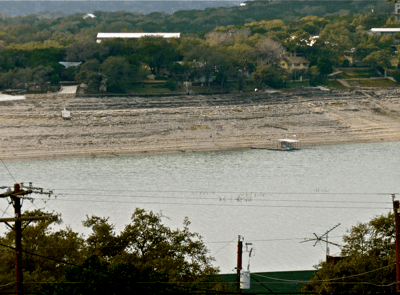
Our drought here in the Texas Hill Country has set records. The lake near my home was 53 feet below normal as of yesterday, and water restrictions have affected agriculture, lawns, and golf courses. The picture below shows what the lake looks like now. The water line is usually up where the vegetation begins, and that flat wooden thing on the slope on the left is someone’s dock. It’s usually floating in the lake.

Here’s a more panoramic picture of the lake. You can see that the low water isn’t confined to the little inlet in the first picture. All that open gray/tan area is the bottom of the lake.

They’ve done a good job keeping the grass alive at my home course, but the combination of drought and winter has created a lot of thin lies. Dormant bermuda always leads to thin lies by this time of year, but the lies last growing season were thin because of the drought so things are even thinner than average this winter. The fairways and aprons all have grass but it’s a very thin cover of dormant bermuda. There are a few courses in the area with large water resources (usually reclaimed) where they’ve overseeded and things look like the course at the Waste Management Phoenix Open, but those courses are in the minority.

Anyway, back to my game changes. First, I’ve never been one to take a large divot with my irons. This works fine with cushy fairways, but when the lies are thin a sweeping iron shot risks a clanging, thin shot. I’ve started focusing my vision intently on the leading edge of the ball, making sure that my swing bottoms out in front of the ball with a little divot. I’m hitting my irons much more solidly this way.

I’ve also been making sure I have a reasonably strong grip. I have a tendency to let the back of my left hand drift so it points up rather than toward the target at impact, and a strong grip reduces this risk. If it does drift up, the strong grip keeps the club face more or less square and I’m less likely to hit the ball thinly. As a side benefit, I’m less likely to miss right. I’m also hitting at least one more club than average (a 6 iron instead of a 7, for example), but I’m not sure if this is because of the swing change or the cooler weather. I’ll find that out when it warms up.

I’m hitting a lot more bump and run shots. It’s too easy to blade a wedge or to flinch because of fear of blading it when there’s no cushion under the ball. Shots where I would have lofted the ball deep into the green with a wedge are now more likely to be bump and runs with a mid-iron. I’ve even played runners from 50 yards out with good results when conditions were right.

Similarly, I’m putting from off the green more often. Under normal conditions I chip more than I putt. I have better distance control when I chip because I can fly the ball over the taller, thicker grass. Now there’s no taller, thicker grass and I’m too likely to blade or chunk the chip shot. Putting works better.

It’s going to be interesting to see what happens when we get normal rainfall and normal turf. I think I’ll be keeping some of these changes in my normal game.

Posted in daily golf issues | Tagged , , , | Leave a comment

The Good Old Boys

A few weeks ago I mentioned that I was writing a local column reporting the results of the weekly tournament I play in and that I’d post a link to the column when I could. For those who are interested, this link will take you to the Bandera County Courier (one of our local papers) and the column  for one of the tournaments.

The Good Old Boys is the name of the group I play with on Mondays. I said a few words about it in a post back in August. We’ve come up with a modified stableford system that works pretty well for a group of players of widely varying abilities. The post in August says a few words about it, but I’ll describe it in more detail here in case someone wants to try it out with their own group.

Players earn 1 point for a bogey, 2 for a par, 3 for a birdie, and 4 for an eagle. (You’d get 5 for a double eagle, but I don’t think that’s ever happened.) Double bogeys or worse are worth 0 points and there are no negative point scores, so you can pick up at double to keep things moving along. A quick way to compute points per round is to subtract a player’s score from a round of all doubles (108 in the case of a par 72 course). For example, a round of bogey golf (90) earns 18 points.

In addition to prizes for points earned in a round, we also have closest to the pin prizes on the par 3s. The entry fee for each tournament is $6.00, of which $1.00 goes into the closest to the pin pot and $5.00 goes into the points pot. The pay out per point depends on how many players are there on any given Monday and how many aggregate points are made. The pay out for closest to the pin depends on the number of players and the number of par 3s with prizes. When there are enough players, we’ll put prizes on all four par 3s. With fewer players we’ll limit it to two of the par 3s.

Each player is playing against his own target number of points to earn. This score is based on prior performance, similar to a handicap. If a player makes more points than their target, they earn a pro-rata share of the points pot and their target for the next round increases by half of the number of points by which they exceeded the target. To use the bogey golfer example, that player would have a target score of 18 points for the round. If he shoots 88, he makes 20 points (two points above his target), is paid for two points, and next time his target will be increased to 19 points.

If a player fails to make his target number of points or exactly equals his target, his target is reduced for next time. So if that bogey golfer shot 90 or higher, he gets no pay out that week and his target for next time is reduced to 17 points. New players play 3 times to establish their target score. After the third time, they become eligible to take home part of the points pot. They are immediately eligible for the closest to the pin prizes.

The system has several advantages. First, players play against themselves, so everyone has a shot at making points and taking home part of the pot. Better players have a slight advantage on the par 3s, but everyone has a decent chance at winning a closest to the pin prize. Second, there is no profitable way to sandbag. You pay for each round, so playing poorly and driving your target point total down costs more in the long run that you’ll win when you play well and make points. Third, improvement is rewarded. If a player gradually improves that improvement results in pay outs along the way. And if a player has been in a slump and suddenly breaks out, they get a nice little reward. Nobody gets rich, but nobody loses much either. It’s my impression that it’s a break even proposition in the long run.

The biggest complaint I hear is that better players are less likely to make a lot of points than are middle of the road players. It’s probably true that a 92 shooter is more likely to shoot 82 and make 10 points at once than a 75 shooter is to shoot 65 and make 10 points, but I’m not sure that the greater consistency of the 75 shooter wouldn’t pay off better in the long run. It’s an empirical question, but I’ve never tried to run the numbers and figure out whether some levels of playing ability are more likely to pay than are others. If I get sufficiently energetic and curious, I’ll check it out and report back.

Posted in daily golf issues | Tagged , , | Leave a comment

My Reasons To Like Golf

After much head scratching, navel gazing, and creative napping I’ve come up with my reasons to like golf. These reasons apply solely to me. Any resemblance to the reasons of others is purely coincidental, although not necessarily impossible.

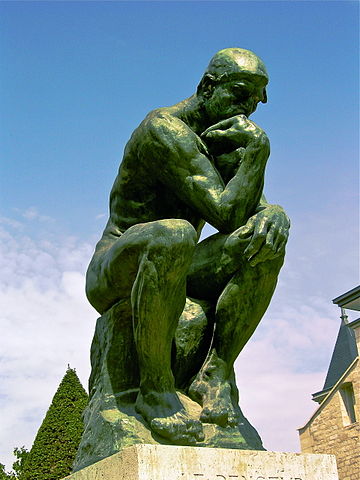
The Thinker, by Auguste Rodin. Image via Wikipedia. In the public domain.

I mentally thumbed through my recollections of golf experiences, looking for the most pleasant memories. Three types of events stood out: Rare perfectly struck shots; fun and companionship with golf buddies; and losing myself in the beauty of nature or the experience of the game. I’ll call those achievement experiences, social rewards, and spiritual immersion.

Achievement Experiences:  Golf gives me something to work on. It’s something I know I can never master, but I can expect those rare flashes of brilliance. Golf will always challenge me, but it won’t be impossible for me improve. It’s a challenge that will last a lifetime, and I can keep at it for a very long time. Golf is a complex skill and I’ll need to change my game as I age and find new ways to play, but as long as I stay in reasonable physical shape I can participate. Few other sports, if any, offer the possibility of such a long playing career.

Social Rewards: Golf provides me with a structure for social interaction. I’m not very good at small talk; I need to have something going on. Golf gives me that thing to organize friendships around. The people I’ve played golf with throughout my life have been among my best friends, and now that I’m retired and don’t meet people at work, I meet new friends on the golf course.

Spiritual Immersion: I can lose myself in the game. Some of my moments of deepest peace, of meditative calm, have come in the midst of rounds of golf. Sometimes it’s becoming lost in the beauty of a fairway at sunset, feeling the grass and the air cooling as the sun goes down. Sometimes it’s standing on the first tee at dawn, hearing the birds awakening in the trees. At other times it’s becoming completely immersed in the rhythm of the round itself, thinking only about the next shot and seeing nothing but the ball and the target. It’s a legal altered state of consciousness with no negative side effects.

Golf seldom gives me all three of these things in one round. In fact, it’s hard to get the social interaction and the spiritual immersion simultaneously because one is outer directed and one is inner directed. But I can choose what I need and play alone or with friends, depending upon my goals.

And on those rare occasions where all three come together, where I’m playing well with good friends and that feeling of peace overcomes me, it’s heaven.

Posted in reflections on golf | Tagged , , | Leave a comment

More Reasons To Like Golf?

I was eating breakfast and watching Morning Drive on the Golf Channel today, and they ran a part of Tiger Woods’ press conference at Abu Dhabi. One of the reporters asked Tiger why he liked to play golf. That struck me as an odd question at a pre-tournament press conference, but Tiger gave a more revealing answer than he often does.

Tiger said he liked golf because it brought back a lot of good memories of his father. He fondly recalls his teenage years and going out to the course in the late afternoons to play golf with his dad.

Although it doesn’t apply to me (my parents didn’t play golf) I can’t deny that family ties are a frequently mentioned reason people love and play golf. I can understand how powerful those feelings could be. Although my father didn’t play, he played with me once a few months after I started to play. I was about 13 and we were on a vacation. For reasons I can’t recall, he and I were on our own one day and he decided to take me to a little municipal course outside Chicago where we rented clubs and played nine holes. I remember being impressed with his play, but I was easy to impress. He beat me. I imagine he shot something like 55 to my 56 or so.

I later learned from my mother that my father had played a few times with some guys from the office, but he decided he didn’t really like it because of the time it took. It had to be more than the time, though, because he loved to sail and would drive several hours each way and sail for half the day whenever he could. He apparently just didn’t like golf that much, although he never said anything about it to me.

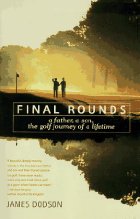
Be that as it may, I still clearly remember how good I felt about playing with him that one time, so I can certainly understand how family play could really encourage a love of golf. It’s a common theme in books, such as James Dodson’s Final Rounds, and golf has shaped the destiny of more than one family. The Harmon, Haas, Wadkins, Duval, Hebert and other well known families come to mind, but I’m sure there are many less well known cases where golf is a powerful family force. This post tells such a story and has a neat WW2 vintage photo of the writer’s grandfather.

I envy those who can say family ties are a big part of their golf enjoyment, but I can’t explain my own love of the game that way. I guess I’ll keep scratching my head a while.

Posted in reflections on golf | Tagged , , | 2 Comments

Reasons To Like Golf?

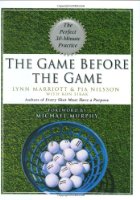
I got to the end of The Game Before The Game a few days ago. It’s a book by Lynn Marriott and Pia Nilsson about golf practice strategies, and it ends by claiming that knowing what you love about golf is crucial in maximizing your performance. If you don’t know why you love to play, you can’t play at your best.

That set me to wondering why I like the game so much, and I still don’t have what feels like a really good answer. But then I was watching the Golf Channel during yesterday’s wind delay at the Humana Challenge. They showed excerpts from their interviews with Bill Clinton and the announcers chatted about a variety of topics while they waited for Slugger White to cancel play for the day. As fate would have it, one of the topics was why why they liked golf.
One of the suggestions was that it was a lot like life. We’ve all heard that, and I guess there’s some truth to it. Golf and life are both full of undeserved good and bad breaks, you need to deal with the situation as you find it in both, you have to develop a plan and routine for all eventualities, etc., etc.

But I have trouble seeing golf being like life as the reason I love golf. I get plenty of real life in real life without going out and searching for more. If I want bad breaks I don’t have to go pay greens fees to get them. They show up at my door for free.

Another suggestion was the handicap system in golf, and how it allows anyone to compete against anyone else. I like the way the system makes competition possible, but I can’t see it as why I love the game. It also seems to contradict the “it’s like real life” reason. If  I need surgery I don’t want my surgeon thinking he can make a bogey on me and it’ll be good enough because he gets a pop on cases as tough as me. I want a scratch surgeon, maybe even one with a plus handicap.

Anyway, I think Marriott and Nilsson may be right about needing to identify why I love golf. I just need to give it some more thought.

Posted in reflections on golf | Tagged , , | 2 Comments

Crunching The Numbers

My golf game is starting to show signs of coming back around, and I got curious about what part of my game contributes the most to my good (or bad) scores. When I pulled down some old records I kept of score, greens in regulation (GIR), and putts per round I couldn’t see any clear pattern. Then I had one of those “You moron! Use that education you suffered through!” moments. I entered the data into a spreadsheet and calculated the correlations between the variables, just like I used to do with my psychological data.

For the statistically minded among you, I calculated the Pearson Product Moment Correlation Coefficient between total score and GIR (-.58), total score and putts (.73), and GIR and putts (-.04). (Correlation coefficients range from -1 to +1, with 0 meaning no relationship exists.)

So, there are strong relationships between my score and both GIR and putting. In fact, correlations of that magnitude are pretty impressive in most real world research. Not surprisingly, my score is lower when I hit more greens (the negative correlation means when one variable goes up, the other goes down), and my score is also lower when I have fewer putts. Putting is a better predictor of my score than is GIR, as you might imagine.

Hogan, by Curt Sampson

None of this is too surprising, although I was impressed by the magnitude of the correlations. What is really interesting to me is the lack of any significant correlation between GIR and putting. It’s like putting and hitting greens are from two totally different sports. I seem to remember that Ben Hogan argued that putting wasn’t really golf. This suggests he had a point, if you consider learning to hit the ball long and accurately to be “real” golf.

I’d hope that when I’m playing well I’m playing well overall, and that does happen sometimes. But the lack of any correlation means that doing well (or poorly) on the greens has nothing to do with how I’m doing in the fairways. I guess that sense I have that there’s almost always some part of my game that is struggling is accurate.

When GIR and putting are in sync, it’s obvious in my score. My best score (a one over 73) had the best GIR (12) and one of the lowest number of putts (29). My highest score (87) had the worst GIR (5) and the highest number of putts (35). But the two are in sync at a rate no better than random chance. This is good news when one part of my game saves the other, or bad news when one part cancels out the good shots in the other. Take your pick.

So what’s the earth-shaking take away from this? Not much I haven’t heard before, although it validates what I’ve heard. Putting is most important to my score. Practicing putting may be the most boring type of practice, but I should do it more. And working on one part of my game doesn’t do much for the other parts. I can’t count on a magic osmosis effect to spread skill throughout my game.

And have you heard that there’s no tooth fairy and your parents were really Santa Claus? I’m still trying to deal with that news.

Posted in daily golf issues | Tagged , , | 3 Comments

The Big W

While watching the Sony Open at Waialae Country Club I saw the palm trees forming that big W behind the 7th green. I’ve seen it before, and it always reminded me of the Big W in the 1963 movie It’s A Mad, Mad, Mad, Mad World. I’ve always figured it couldn’t be the same palm trees as in the movie – they were full grown 50 years ago, looked about the same as they do now, and the movie was set in Southern California, not Hawaii – but I’ve always wondered if there was a connection.

For those of you that don’t know the movie, it was one of those cavalcade of stars events  and included Sid Caesar, Spencer Tracy, Jonathan Winters, Milton Berle, Buddy Hackett, Jimmy Durante, etc., etc. The plot revolved around a madcap search for a lot of money buried under “The Big W”, but no one knew where that was. Eventually they discovered four palm trees in the shape of a W, like the ones at Waialae.

According to Matt Ginella in Golf Digest, there is a tenuous connection. You can find the whole story by following the link above.

Thank you, Matt. I can sleep better now.

Posted in PGA Tour | Tagged , | Leave a comment

Golf Follows Me

My relationship with golf has lasted longer than any other in my life. I started playing when I was 13 or 14, so I’ve played for at least 47 years. The closest competing relationship is my marriage, and it’s lasted 40 years. I’ve lived in a dozen towns and many more houses than that. I went to 8 schools before college, to 3 universities, and I never worked at one place for more than 6 years. I’ve called many people in many places my friends, but most are lost in the past. Golf is a thread that runs through it all.

Different places, different people, but always golf. Some places my friends played a lot of football, and I played. Friends in other places were more cerebral, and I b.s.’ed with the best of them. I shot pool ’til dawn, studied all night, worked 24/7, messed around a lot. I saw patients, taught, spent hours and hours in pointless meetings, and finally walked away. Golf was always waiting for me, even if abandoned for a while.

Phases of my life are marked by images from the course. There’s the first tee at that first course I ever played. It was a par 3 course, and I remember the great friend I played that hole with. There’s the round when I was an undergrad when I hit all of my putts 50% too long, no matter what I tried. I played that round with my roommate, now an architect in Cleveland if the internet is to be believed. There’s that first drive in Florida when I played with my new university colleagues. They thought their new dean might be a real golfer, but I corrected that impression by the third hole.

It’s beautiful holes at sunset, walking the fairway with friends lost and gone. It’s standing on that first tee at dawn, listening to a friend in his early 50’s tell me about the cancer he knew would kill him. A few years later, it did. It’s laughing so hard I can’t see to hit my putt while my buddies chatter behind me. And it’s driving through new and unfamiliar towns, looking at golf courses and wondering how hard it is to get on. Some I played, and some I never did.
I like to do different things now than when I was 14. I like different food, different drinks, different books. I still watch the Dallas Cowboys (in color now) but it’s like a bad habit I can’t break. I miss Tom Landry, Dandy Don, Roger the Dodger. But when it’s Sunday at The Masters, I’m just as transfixed as I was that first time.

Golf Dreams by John Updike

I’ve often wondered what it is about golf that has held me. Why has it stayed when so little else has? I can find only one answer. John Updike once said that he was “curiously, disproportionately, undeservedly happy on a golf course.” Although I may rant and rave about my game, trudge fuming to the car after a bad round, and wonder if I’d be happier if I quit, I know the answer every time I stand on that first tee and watch Cowboy Roy throw the balls to set the order in wolf. I grin, dig a tee out of my bag, and feel “curiously, disproportionately, and undeservedly happy.” And in that moment I rediscover a 14 year old kid, standing on that first par 3 with his best friend.

I wonder how he’ll hit it?

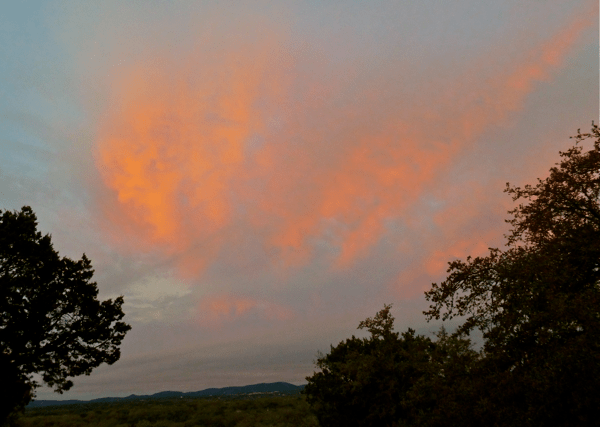
(Quote from “U.S. Golf”, a speech by John Updike at the One Hundredth Anniversary Celebration of the USGA. Reprinted in Golf Dreams, by John Updike. Sunrise photo by Charles Prokop.)

Posted in golfing memoir, reflections on golf | Tagged , , , | Leave a comment